Eco-Friendly Uv Resin is changing how makers, manufacturers, and designers approach light-cured materials. Unlike conventional formulations, it may use bio-based components, reduced volatile emissions, or cleaner production methods. Yet the label requires careful examination. “Eco-friendly” does not automatically mean harmless, biodegradable, or safe to discard anywhere.
Green-chemistry pioneer John Warner often explains the central principle simply: “Green chemistry is design.” That idea fits Eco-Friendly Uv Resin closely. Its environmental value begins before curing, with ingredient selection, energy use, packaging, workplace exposure, and end-of-life handling. A resin bottle may look small, but its chemical footprint is not always small. Some products still contain reactive acrylates that can irritate skin or remain hazardous before complete curing.
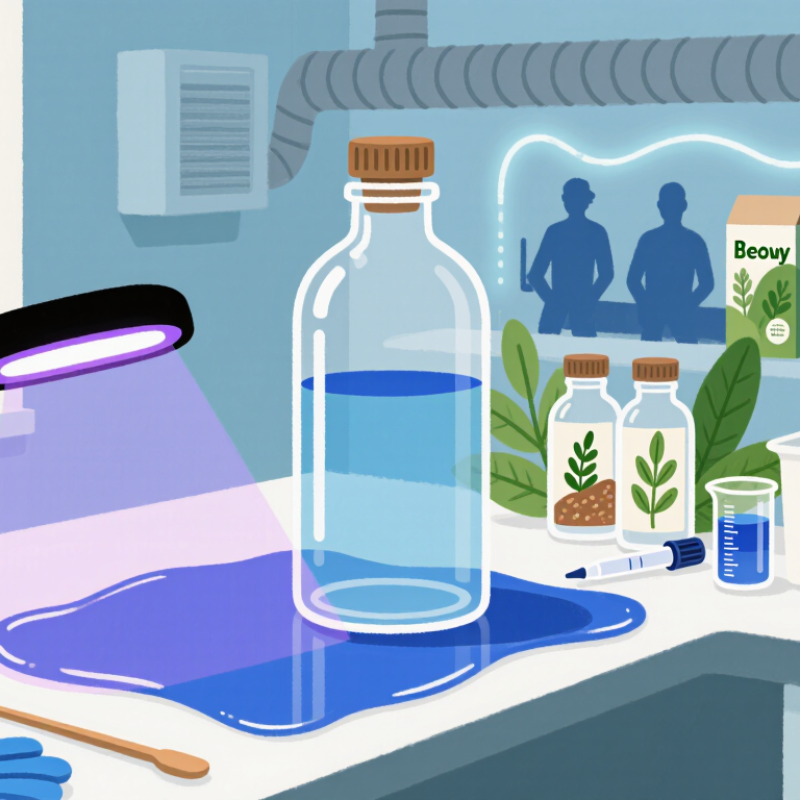
Under ultraviolet light, photoinitiators trigger polymerization. Liquid resin becomes a solid network within seconds. Picture a thin layer hardening beneath a desktop UV lamp, while uncured resin remains glossy around the edges. The result depends on wavelength, exposure time, layer thickness, and lamp intensity. Weak curing can leave sticky surfaces and unreacted chemicals.
This process is efficient, but not perfect. Bio-based content may reduce fossil dependence without making the final object compostable. Lower odor may also create false confidence. Users should read technical data sheets, wear suitable gloves, improve ventilation, and cure waste fully according to manufacturer guidance. Responsible selection means comparing measurable evidence, not trusting attractive packaging alone. More transparent standards are still needed. That is an uncomfortable truth, but an important one.
Eco-friendly UV resin is a light-curing liquid material designed to reduce certain environmental and health concerns. It usually contains fewer harsh solvents, lower-odor ingredients, or partially bio-based components. However, “eco-friendly” has no single universal meaning. A greener label does not automatically mean biodegradable, harmless, or fully sustainable.
The resin stays liquid until ultraviolet light activates its photoinitiators. These compounds trigger chemical reactions, linking small molecules into a hard plastic network. Under a UV lamp, a thin layer may cure within minutes. A properly cured surface should feel smooth and firm, not oily or sticky. Poor curing can leave uncured chemicals behind. That part is easy to overlook. Check technical data sheets for curing wavelengths, composition, and safety guidance before use.
Tips: Work in a ventilated area and wear suitable gloves. Use thin layers to improve curing. Turn small pieces while exposing them to light. Keep liquid resin away from skin, drains, food areas, and direct sunlight. Collect failed prints and contaminated materials for proper disposal, rather than washing them away. Even cured resin remains a plastic material, so reuse scraps when practical. I still question broad sustainability claims unless they include clear testing data, ingredient information, and disposal instructions.
Eco-friendly UV resin is formulated to cure quickly under ultraviolet light while reducing solvent use and fossil-based ingredients. Its core usually contains oligomers, reactive diluents, photoinitiators, and additives. The photoinitiator absorbs UV energy and starts polymer cross-linking. The liquid then becomes a solid polymer network within seconds. The US Environmental Protection Agency describes UV-curable coatings as nearly 100% solids systems, so very little material evaporates as VOC emissions.
Formulators may replace part of the petroleum-derived content with bio-based acrylates from plant oils, cellulose, or other renewable feedstocks. They also adjust viscosity, curing speed, flexibility, and yellowing resistance. A 2023 RadTech industry report identifies 100% solids chemistry and reduced emissions as major advantages of UV and electron-beam curing. However, bio-based content alone does not prove sustainability. Some ingredients still require energy-intensive processing. Uncured resin can also irritate skin and harm aquatic environments, so safer handling remains essential. The “eco” label deserves scrutiny.
Tips: Check the technical data sheet for bio-based content, VOC information, and curing conditions. Use measured amounts, not generous pours. Cure every surface fully. Poor curing creates sticky waste and weak results. Dispose of leftovers according to local chemical-waste guidance. Claims without test methods should invite questions.
What Is Eco-Friendly UV Resin and How Does It Work?
Eco-friendly UV resin cures through photopolymerization rather than prolonged oven heating. Its photoinitiators absorb ultraviolet light, commonly near 365–405 nanometers. They then create reactive species that link liquid monomers into a solid polymer network. A small resin puddle can harden within seconds under a suitable lamp. The surface may feel slightly tacky when oxygen interrupts the reaction. That detail is easy to overlook.
RadTech’s UV+EB Technology Roadmap reports that ultraviolet and electron-beam curing can reduce energy consumption by up to 90% compared with thermal drying in suitable applications. The technology also supports 100% solids formulations, which can substantially reduce solvent-related volatile organic compound emissions. However, “eco-friendly” needs careful wording. Cured resin is not automatically biodegradable, and uncured material still requires controlled handling. The lamp’s wavelength, intensity, distance, and exposure time must match the formulation.
In practical use, thin layers cure more evenly than thick ones. A 2-millimeter pour may harden at the top while remaining soft underneath. Pigments, fillers, and recessed details can also block UV penetration. The U.S. Environmental Protection Agency identifies UV-cured coatings as a lower-VOC option when properly formulated and applied. Still, disposal and incomplete curing deserve attention. I would not treat a fast cure as proof of low environmental impact. It is only one measurable part of the process.
UV resin cures when a photoinitiator absorbs ultraviolet light and starts polymerization, linking liquid resin molecules into a solid network. The photon-energy values below are calculated from the standard relationship E = 1240 ÷ wavelength, where energy is measured in electronvolts and wavelength in nanometers.
Eco-friendly UV resin is a light-curable material designed to reduce environmental impact during making and disposal. It hardens under ultraviolet light, forming detailed objects within minutes. Some formulas include partially bio-based ingredients or reduce volatile solvents. However, “eco-friendly” does not mean harmless. Uncured resin can irritate skin and requires careful handling, ventilation, and proper disposal.
The practical benefits are easy to notice. Fast curing shortens production time and reduces dust exposure from extended processing. Liquid resin also supports precise details, smooth surfaces, and controlled material use. This can mean fewer failed prints and less discarded material. Reusable supports and accurate digital settings help further. Small changes matter.
Energy use may be lower than heat-based curing methods, but the result depends on the lamp, curing time, and workshop habits. A recent comparison should include the full process, not just the resin label. Some bio-based content sounds impressive, yet it may not guarantee biodegradability. That point deserves honest checking. Makers should review technical data, follow local waste rules, and keep uncured material away from drains and soil. Properly cured pieces are more stable, but they should not automatically enter household recycling.
| Data Dimension | Typical Information | How It Works or Helps | Important Environmental or Practical Note |
|---|---|---|---|
| Basic Definition | Photopolymer resin formulated to harden when exposed to ultraviolet or near-ultraviolet light, commonly in the 365–405 nm range. | Light activates photoinitiators, which trigger polymerization of reactive liquid components into a solid plastic network. | “Eco-friendly” is not a universal regulatory classification. Environmental performance depends on the complete formulation, manufacturing process, use phase, and disposal method. |
| Curing Method | UV or visible-light curing; many systems cure under 365 nm, 385 nm, or 405 nm light. | Selective exposure allows precise hardening of printed layers, coatings, jewelry, models, or small molded parts. | Use the wavelength and exposure time specified for the material. Incomplete curing can leave residual chemicals and reduce mechanical performance. |
| Typical Cure Time | Often several seconds per layer in resin 3D printing, while post-curing may require several minutes. Exact times vary significantly. | Rapid solidification can reduce production waiting time and support detailed, low-volume manufacturing. | Cure time depends on light intensity, layer thickness, pigment, resin chemistry, part geometry, and equipment calibration. |
| Volatile Organic Compound Profile | Many UV resins are high-solids or 100% reactive systems, meaning they do not require water or solvent evaporation to form the final solid. | Less solvent evaporation can reduce process-related VOC emissions compared with solvent-based coatings. | Low-VOC does not mean non-toxic. Uncured resin, vapors, additives, and cleaning liquids may still require ventilation and controlled handling. |
| Material Efficiency | Additive UV printing places material only where the digital design requires it, although supports and failed prints may create waste. | Layer-by-layer production can reduce machining chips and offcuts compared with subtractive manufacturing for suitable designs. | Actual material savings depend on part geometry, support design, print success rate, and whether unused resin can be safely recovered. |
| Energy Use During Processing | UV curing is localized and generally operates at lower temperatures than heat-cured processes. | Lower-temperature processing can reduce the need for ovens or prolonged thermal heating in some applications. | Total energy demand also includes the printer, UV source, ventilation, washing, post-curing, and failed-print replacement. A lower curing temperature does not automatically guarantee a lower total footprint. |
| Renewable or Bio-Based Content | Some formulations replace a portion of petrochemical feedstocks with plant-derived or other renewable raw materials. | Bio-based ingredients may reduce dependence on fossil-based feedstocks when responsibly sourced. | Bio-based content does not necessarily mean biodegradable or compostable. The percentage and verification method should be stated by the material supplier. |
| Durability | Depending on chemistry, cured resin can provide rigid, tough, flexible, transparent, or heat-resistant properties. | Longer service life can reduce replacement frequency and the material required over the product’s use phase. | Some cured photopolymers can become brittle or discolor under prolonged UV exposure, heat, or moisture. Product life should be assessed for the intended application. |
| Water Consumption | UV curing itself does not require water evaporation. Cleaning may use alcohol-based liquids or specialized washing systems. | Waterless curing can reduce process-water demand compared with water-based or aqueous cleaning steps in certain workflows. | Cleaning liquids contaminated with uncured resin must not be poured into drains. They should be collected and treated as chemical waste according to local rules. |
| Safety Before Curing | Uncured resin may irritate the skin and eyes and can cause sensitization in susceptible individuals. | Gloves, eye protection, suitable ventilation, and careful handling reduce exposure risks. | Follow the safety data sheet for the specific formulation. Avoid skin contact, do not handle uncured parts with bare hands, and keep resin away from children and pets. |
| Safety After Curing | Fully cured material is generally more stable and less reactive than liquid resin, but it remains a polymeric solid. | Thorough washing and post-curing reduce residual liquid resin on the part surface. | “Fully cured” does not automatically mean food-safe, skin-safe, medical-grade, or suitable for drinking-water contact. These uses require specific testing and certification. |
| End-of-Life Options | Most cured UV resins are thermoset polymers and are not readily remelted like common thermoplastics. | Long service life, repair, reuse, and design optimization are usually more practical environmental strategies than conventional mechanical recycling. | Do not place liquid or partially cured resin in household recycling. Fully cured waste should be handled according to local waste regulations. |
| Best Applications | Prototyping, customized parts, intricate models, small decorative objects, dental or technical applications with appropriate certified materials, and precision coatings. | Digital production supports customization, complex shapes, short production runs, and reduced inventory requirements. | For large-volume production or long-term outdoor use, compare UV resin with thermoplastics, powder coatings, or other alternatives using a full life-cycle assessment. |
| How to Improve Sustainability | Use the minimum effective support structure, print successfully on the first attempt, cure parts completely, and extend product life through repair or reuse. | Good process control reduces material waste, rework, cleaning consumption, and unnecessary energy use. | Choose formulations with transparent ingredient and safety information, verified bio-based claims where relevant, and disposal instructions that match local regulations. |
Eco-friendly UV resin cures under ultraviolet light, forming a hard polymer within minutes. Its environmental value depends on the formula and process. RadTech’s industry guidance reports that UV curing can reduce energy use by up to 50–90% in suitable applications. It can also reduce solvent emissions. These figures are application-dependent, not promises. Common uses include jewelry molds, small prototypes, decorative parts, and repair work. The liquid resin is not harmless, even when the finished piece feels solid.
Responsible handling matters more than the “eco-friendly” label. The European Chemicals Agency identifies several acrylates as skin sensitizers. Wear nitrile gloves, protective eyewear, and use local ventilation. Keep uncured resin away from drains, soil, food surfaces, and children. Cure spills only when the method is approved for that material. Fully cured waste may be treated differently from liquid resin, so follow local disposal guidance. I have found that rushed curing often leaves sticky surfaces and creates extra waste.
Tips: Measure carefully. Cure in thin layers. Rotate the piece for even exposure. Store resin in a cool, dark cabinet. Keep the bottle sealed. An odorless workspace is not proof of safety. Check the safety data sheet before changing lamps, gloves, or disposal methods. EPA pollution-prevention guidance also supports minimizing excess material, which is often the simplest environmental improvement.
It is a liquid material that hardens under ultraviolet light. A smooth, firm surface indicates proper curing. The term “eco-friendly” is not universal. It does not guarantee biodegradability or complete sustainability.
Photoinitiators absorb ultraviolet light and start chemical linking. Small molecules form a hard plastic network. Thin layers may cure within minutes. Poor curing can leave sticky chemicals behind.
Some formulas reduce solvents or replace part of fossil-based content. Plant oils, cellulose, and other renewable materials may provide bio-based ingredients. That sounds promising. It still needs evidence.
No. Bio-based ingredients may require energy-intensive processing. They may not make the final object biodegradable. Check the percentage, testing method, and manufacturing details.
Apply thin layers and follow the recommended curing wavelength. Rotate small pieces under the lamp. Cure every surface fully. A sticky finish signals a problem.
Work in a well-ventilated area and wear suitable gloves. Keep liquid resin away from skin, food areas, drains, and sunlight. Do not wash leftovers into sinks. Small spills still matter.
Fast curing can shorten production time and support detailed, controlled objects. Accurate digital settings may reduce failed pieces. Reuse supports when practical. I sometimes underestimate small scraps.
Collect liquid resin, failed pieces, and contaminated materials separately. Follow local chemical-waste guidance for disposal. Fully cured resin is still plastic and should not automatically enter household recycling.
Eco-Friendly Uv Resin is a light-curable material designed to reduce unnecessary environmental impact while maintaining the convenience and performance expected from conventional UV resin. It is formulated with carefully selected components that may support lower odor, reduced waste, and more responsible production or disposal practices. Unlike resin that hardens through air exposure or heat, it remains liquid until exposed to a suitable ultraviolet wavelength. The light activates a photoinitiator, triggering a chemical reaction that quickly transforms the resin into a solid, durable structure.
Its practical benefits include fast curing, precise detail, efficient material use, and reduced reliance on extended heating. Eco-Friendly Uv Resin can be used for crafts, decorative objects, prototypes, repairs, and other small-scale creative projects. Responsible handling remains essential: work in a well-ventilated area, avoid direct skin or eye contact, wear suitable protective equipment, follow curing instructions, and prevent uncured material from entering drains or natural environments. Proper storage and disposal help ensure that its environmental advantages are supported by safe everyday use.

Ever Ray