What Is Flexible UV Resin Used For?

Time:2026-11-03 Author:Sophia
0%

Flexible UV Resin is designed for parts that need to bend slightly instead of snapping under light pressure. After curing, it can feel rubbery or resilient, depending on its formulation, layer thickness, and exposure conditions. Think of a small hinge, a wearable accessory, or a protective cover flexing in your hand. The material has practical limits. A flexible label does not guarantee a durable part.

A useful principle for this topic is: “Flexibility is a formulation outcome, not just a label on the bottle.” This is proposed wording, not a verified quotation. No source article or expert citation was provided, so a real expert’s name should be confirmed before publication. That matters. A credible guide should distinguish tested performance from marketing claims.

This article explores what Flexible Uv Resin is used for, how its properties suit different projects, and where careful testing is essential. Makers may use it for bendable prototypes, shock-absorbing components, soft-touch details, or parts that face repeated movement. Results vary with the resin, printer, curing process, and design. A thin strap may flex smoothly, while a thick block of the same resin may feel stiff. Start with a small test piece. Check its movement, surface, and recovery after bending. Those simple observations can reveal more than a product name alone.
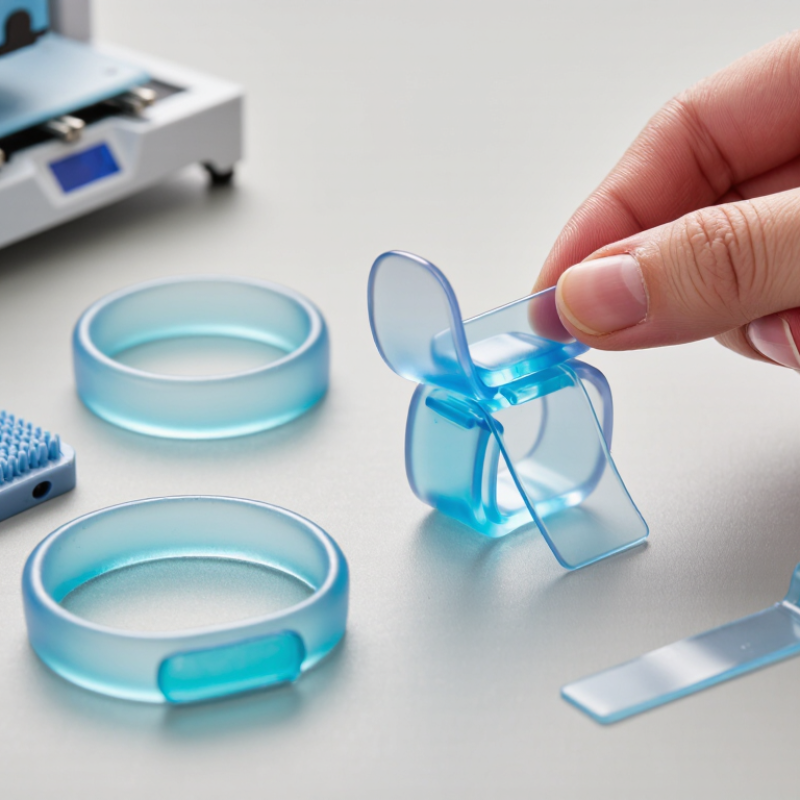
What Is Flexible UV Resin Used For?

What Flexible UV Resin Is and How It Differs from Standard Resin

What Is Flexible UV Resin Used For?

What Flexible UV Resin Is and How It Differs from Standard Resin

Flexible UV resin is a light-curable photopolymer designed to bend after curing. Its formulation gives it more elasticity than standard resin, which is typically harder and more likely to crack under repeated flexing. The difference is not simply “soft versus hard.” Elongation, hardness, print geometry, and curing conditions all affect how a finished part feels. A thin test strip may bend easily, while a thick block of the same material may feel quite firm. Not indestructible. Flexible parts can still tear or deform if they are stretched too far, and extra post-curing may change their feel.

This resin suits prototypes that need a little give, such as flexible covers, grips, seals, and wearable model components. Standard resin is often a better fit for rigid, crisp parts that must hold their shape. For industry context, Grand View Research’s UV Curable Resins Market Size, Share & Trends Analysis Report estimated the global market at USD 5.5 billion in 2023, with a projected 7.4% compound annual growth rate from 2024 to 2030. That figure covers UV-curable resins broadly, not flexible 3D-printing resin alone. When choosing a material, check its technical data sheet for elongation and hardness, then test a small part under realistic use. The numbers help, but real parts can surprise you.

How UV Curing Gives Flexible Resin Its Elasticity

Flexible UV resin is used for parts that need to bend slightly instead of snapping, such as soft decorative pieces, wearable details, and protective coatings. Its stretch comes mainly from the resin’s chemistry, not from UV light alone. The formulation may contain longer, more mobile polymer building blocks and fewer rigid links than a brittle resin.

When UV light reaches the resin, a photoinitiator absorbs the energy and starts polymerization. Small molecules join into a solid network. The network holds the shape, while its flexible segments can move and recover when gently bent. That balance matters. Too many tight connections can make a cured piece stiff; too few may leave it weak or tacky. Light intensity, exposure time, layer thickness, and the resin’s wavelength compatibility also affect the result.

A thin layer may cure evenly under a suitable lamp, while a thick or shaded area can remain soft inside. Check the resin’s instructions and test a small sample before making a finished part. I would not assume “flexible” means indestructible. Repeated bending, heat, or prolonged sunlight may change how a piece feels over time. The useful result is controlled give, not unlimited stretch.

What Is Flexible UV Resin Used For? — How UV Curing Gives Flexible Resin Its Elasticity

UV light triggers polymerization, linking resin molecules into a solid network. Flexible formulations use polymer structures and crosslink densities that allow the cured material to bend and stretch. The chart shows conventional UV wavelength bands; the resin’s photoinitiator determines which wavelengths can cure it.

UV band boundaries are conventional and may vary slightly by reference.

Key Properties That Shape Its Practical Uses

Flexible UV resin is useful when a cured part must bend slightly instead of cracking under a small load. Its practical behavior depends on elongation, hardness, tear resistance, and how fully the resin cures. A soft feel alone proves little. A thin test strip may flex easily, while a thicker piece can feel stiff.

For usable comparisons, ASTM D638 measures plastic tensile properties, including strength and elongation at break; ASTM D2240 measures indentation hardness. These test methods help turn product claims into comparable data, though results depend on specimen shape and test conditions. In practice, flexible formulations suit bendable labels, soft-touch details, protective covers, and small wearable prototypes. Think of a thin cover flexing around a rounded edge. Fit matters.

Cure depth matters too. Pigments, thick sections, and shadowed areas can leave material under-cured, changing feel and strength. Check the resin’s specified wavelength and exposure guidance, then test a sample at the intended thickness. A little bend is useful. Too much can mean weak edges or permanent stretching. Flexible does not mean indestructible; repeated folding may still cause fatigue, and that trade-off deserves testing before a part is relied on.

What Is Flexible UV Resin Used For? - Key Properties That Shape Its Practical Uses

Typical uses depend on the resin formulation, the curing light, and the requirements of the finished part.
Property Practical effect Common uses Important consideration
Flexibility after curing The cured material can bend or compress more readily than a rigid UV resin, depending on its formulation and thickness. Flexible miniature parts, wearable accessories, soft-touch details, and decorative components. Flexibility varies widely. Check product-specific hardness and elongation data before choosing a resin for a load-bearing part.
Elastic recovery Some formulations return toward their original shape after bending or compression. Prototypes for flexible features, covers, gaskets, and cushioning elements. Repeated flexing can cause fatigue or permanent deformation; test the part under its intended conditions.
UV-triggered curing Light initiates polymerization, allowing exposed resin to solidify without a conventional heat-curing oven. Small castings, surface details, repairs, and compatible 3D-printing applications. Curing depends on the formulation, light wavelength, exposure, and part geometry. Thick or opaque sections may not cure evenly.
Fine-detail capability Liquid resin can capture small surface features in suitable molds or printing systems. Jewelry details, hobby models, miniature components, and design prototypes. Fine details do not guarantee toughness. Thin features may still tear or break when flexed.
Adhesion to selected surfaces After appropriate preparation, some formulations can bond to compatible substrates. Small repairs, bonding details, and protective or decorative coatings. Adhesion is substrate- and formulation-dependent. Clean, dry surfaces and a compatibility test are important.
Resistance to impact and vibration A more compliant material can absorb some deformation that might crack a brittle resin. Protective features, flexible enclosures, and prototypes exposed to light impacts or vibration. Impact performance is not the same as structural strength. Do not assume suitability for safety-critical or high-load parts.
Liquid handling before cure The uncured resin can flow into a mold or around a small feature before light exposure. Small molded items, embedded decorative details, and touch-up work. Use appropriate protective equipment and follow the safety data sheet. Avoid skin contact with uncured resin.
Formulation-dependent durability Flexibility, chemical resistance, and outdoor stability differ between products. Indoor decorative parts, prototypes, and selected coating or accessory applications. Check resistance to heat, moisture, chemicals, and sunlight for the specific resin; UV exposure may cause some materials to age or change color.

Common Applications in Crafts, Prototyping, and Repairs

What Is Flexible UV Resin Used For?

Flexible UV resin suits craft details that need to bend slightly rather than snap under light pressure. Makers use it for soft-edged charms, wearable decorations, thin overlays, and small molded parts. A cured piece can feel rubbery or springy, depending on its formulation and thickness. That difference matters. A pendant may tolerate gentle flexing, while a repeatedly stretched strap may fail early.

For prototyping, flexible resin helps test seals, grips, buttons, and protective covers before committing to a final material. In small repairs, it can fill shallow gaps or reinforce a non-load-bearing edge, provided the resin bonds to the surface and receives enough UV exposure. Clean, dry surfaces help; deep or shaded areas may remain undercured.

The Wohlers Report 2024 estimated that additive manufacturing products and services reached $21.8 billion in 2023, an 11.1% increase. This industry-wide figure signals broad adoption of 3D printing, not demand for flexible UV resin specifically. Treat it as context, not proof.

Test a sample first. Resin that feels flexible today may still crack after repeated bending, heat, or sunlight, and that is easy to overlook. Follow the product’s curing and protective-equipment instructions, especially when handling uncured resin.

How to Select and Handle Flexible UV Resin Safely

Flexible UV resin suits parts that must bend slightly, absorb vibration, or resist cracking, such as soft grips, seals, cable guides, and wearable prototypes. Choose by cured Shore hardness and elongation at break, not by “flexible” on the label alone. Compare technical data sheets tested under the same method, and check whether values apply after the stated curing conditions. A thin strip may feel supple; a thick section can cure differently. I have found that this is easy to overlook.

Before buying, confirm the resin’s wavelength range, recommended exposure time, and post-cure requirements match your lamp and part geometry. Read the safety data sheet for uncured ingredients, ventilation advice, and glove compatibility; do not assume every disposable glove offers equal protection. Keep resin off skin, protect eyes, and handle spills with the specified materials. ACGIH’s occupational guidance gives an actinic ultraviolet exposure limit of 30 J/m² effective radiant exposure over an eight-hour workday. This is a general UV limit, not a resin-specific safety rating. Use shielding and wavelength-appropriate eye protection, and avoid looking directly at a curing source. Small projects still deserve care.

FAQS

What makes flexible UV resin bend instead of snap?

Its formulation contains mobile polymer segments and fewer rigid links. UV light starts curing, but chemistry sets the flexibility.

How does UV light cure flexible resin?

A photoinitiator absorbs the light and starts polymerization. Small molecules form a solid network. The flexible segments can still move.

What affects the cured resin’s flexibility?

Formulation, light intensity, exposure time, and layer thickness all matter. Too many tight links can make it stiff.

What can flexible UV resin be used for?

It can make soft-edged charms, wearable details, thin overlays, grips, seals, and small prototypes. It suits gentle bending.

Can it handle repeated stretching?

Not necessarily. A pendant may tolerate a small bend, while a stretched strap could fail sooner. Test the intended shape.

How can I check whether a resin suits my project?

Compare cured Shore hardness and elongation data from technical sheets. Check curing conditions, too. “Flexible” alone tells you little.

How can I avoid soft or undercured spots?

Match the resin’s wavelength range and exposure instructions to your lamp. Thick or shaded areas may stay soft inside. Test a sample.

What handling precautions should I take?

Keep uncured resin off skin and protect your eyes. Use suitable ventilation, gloves, shielding, and eye protection. Small projects still deserve care.

Will flexible resin stay springy over time?

Repeated bending, heat, and prolonged sunlight may change its feel. I still find that easy to overlook.

Conclusion

Flexible Uv Resin is a light-curing material designed to remain somewhat elastic after it hardens, unlike standard resin, which is generally more rigid and brittle. During UV exposure, its formulation forms a solid structure while retaining flexibility, helping finished pieces bend slightly and better tolerate movement or impact. Its practical performance depends on factors such as softness, strength, thickness, and curing conditions, so choosing a suitable type and following its instructions are important.

This resin can be useful for craft details, flexible decorative components, small prototypes, and minor repairs where a rigid finish may crack or feel unsuitable. Before use, consider the required level of flexibility, the size of the project, and the surfaces involved. Work in a well-ventilated area, avoid skin and eye contact with uncured resin, and use appropriate protective equipment. Cure the material fully according to its directions before handling or using the finished item.


Sophia

Sophia

Sophia is a dedicated marketing professional with an exceptional depth of knowledge about her company's products and services. With a keen understanding of market trends and customer needs, she crafts insightful blog posts that not only inform but also engage readers, enriching the company’s online......