Explore our premium grade functional polymer compounds, engineered for outstanding reactivity, chemical resilience, and durability across automotive, industrial, and consumer coatings.
Delivering high-value industrial integration across geographical markets with bespoke polymer supply chains and performance guarantees.
Global electronics manufacturers face high thermal stresses and miniaturization challenges. Our custom-formulated modified epoxy acrylates provide critical insulating barriers, moisture prevention, and minimal cure shrinkage, guaranteeing precision component reliability under extreme field conditions.
Transitioning from solvent-borne to environment-friendly UV waterborne and pure polyester acrylate oligomers. Ever Ray supports manufacturers in cutting down VOC emissions while preserving exceptional surface properties, high scratch protection, chemical resistance, and non-yellowing characteristics.
For printing configurations running up to 500 meters per minute, our reactive oligomers exhibit excellent pigment wetting profiles, fast cross-linking capabilities, and outstanding adhesion properties on challenging metal-foils, plastics, and synthetic cardstocks.
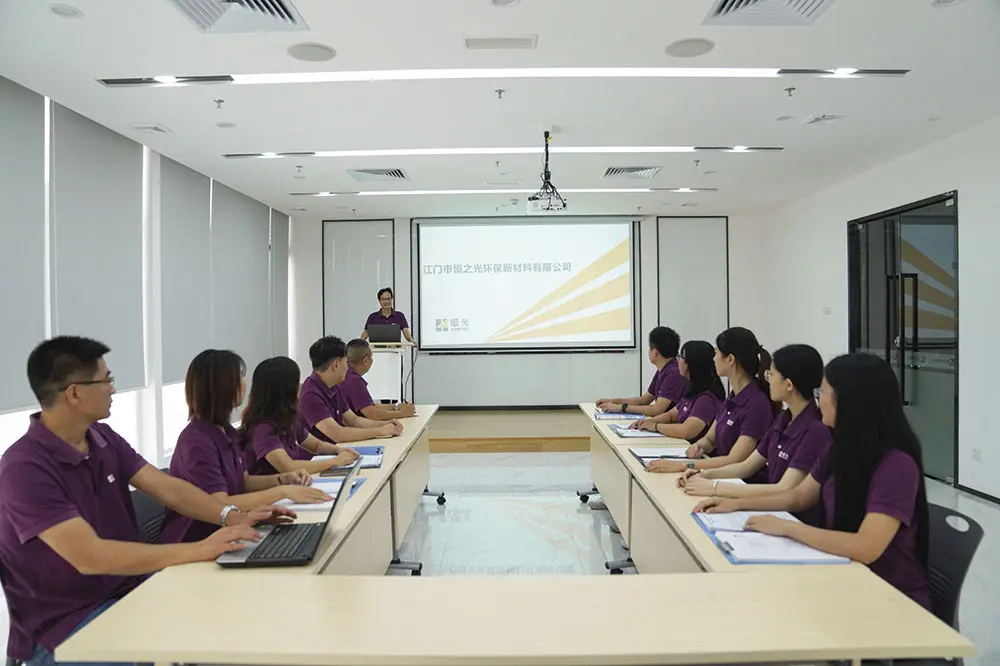
Established in 2006, Guangdong Ever Ray Environmental Material Co., Ltd. is a nationally recognized high-tech enterprise prioritizing safety, sustainability, and technological pioneering. We focus specifically on the complex R&D and large-scale manufacturing of high-purity oligomers for UV curable systems.
Our comprehensive catalog spans epoxy acrylates, polyurethane acrylates (including advanced waterborne, aliphatic, and aromatic urethane types), polyester acrylates, pure acrylates, and specialty modified functional acrylic monomers designed to address specific industrial problems.
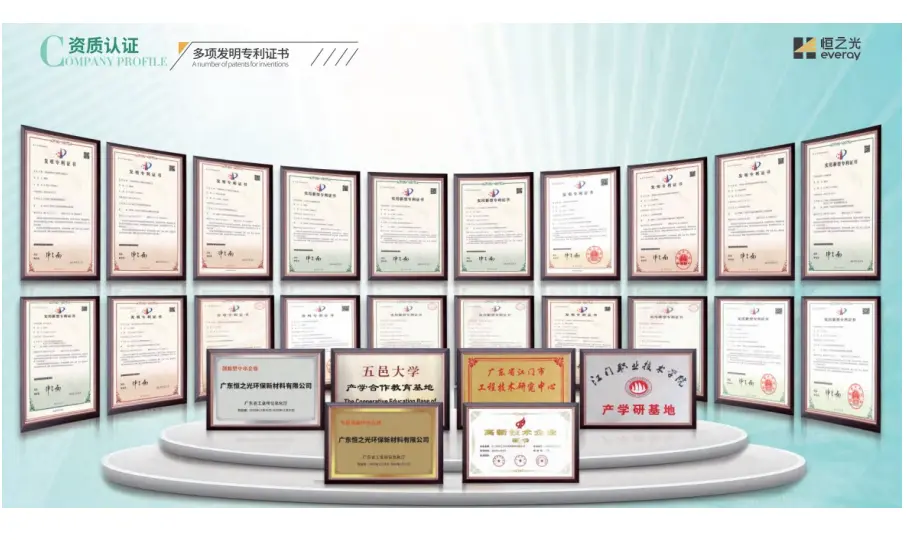
Equipped with a core technical department housing 15+ professional chemists and polymer engineers, we maintain over 10 invention and utility patents. Our formulations improve reaction velocity, chemical barrier resilience, and optical gloss profiles, helping clients achieve superior performance alongside long-term material cost-reduction.
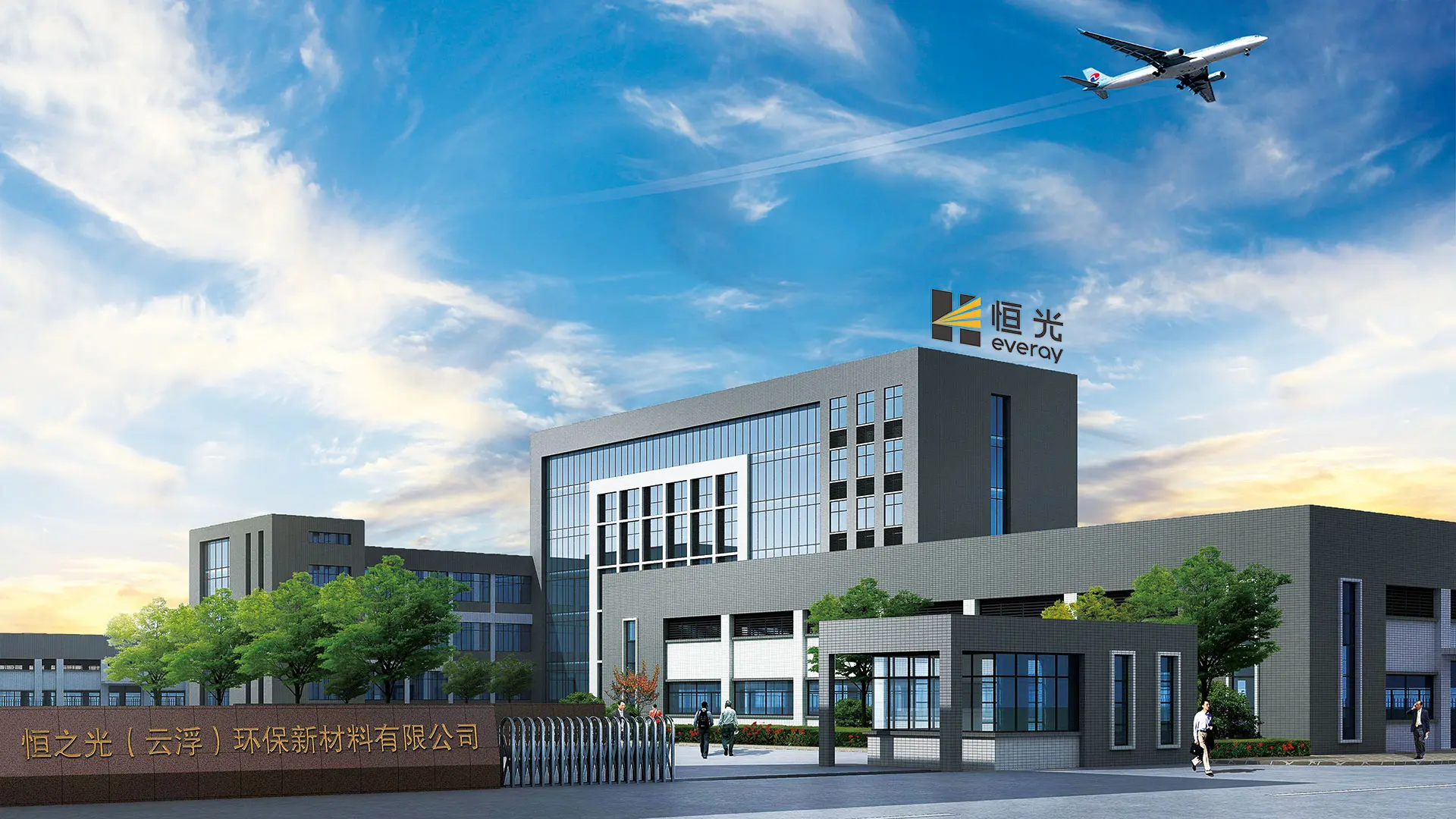
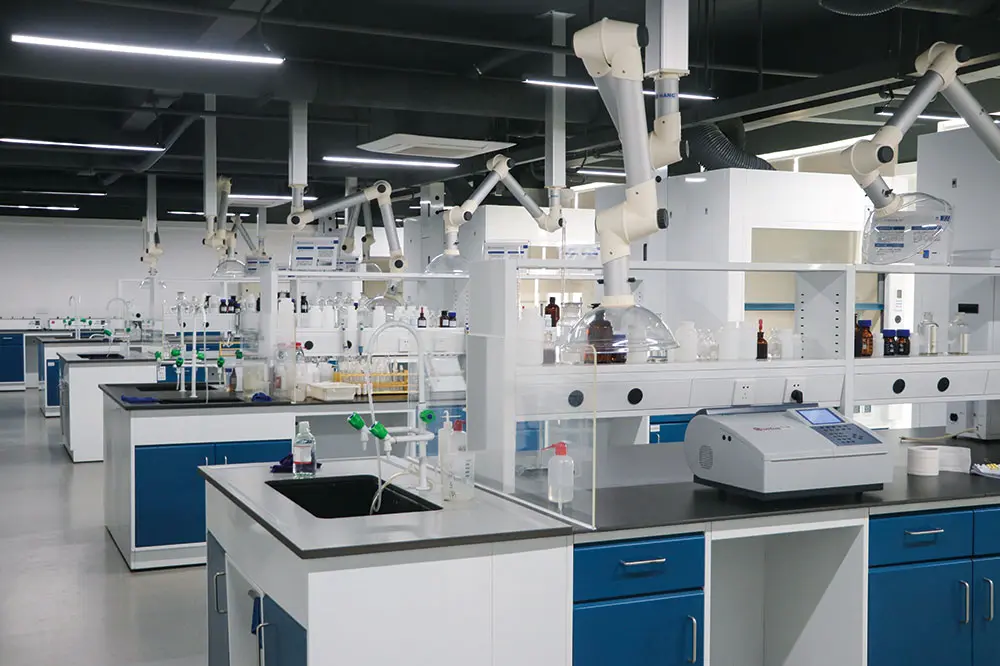
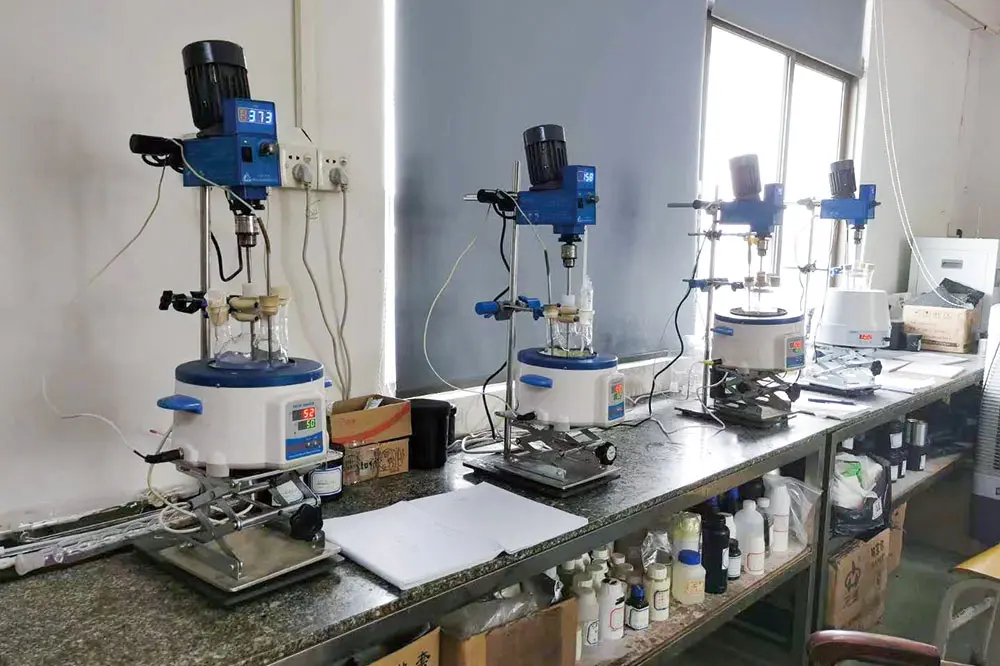
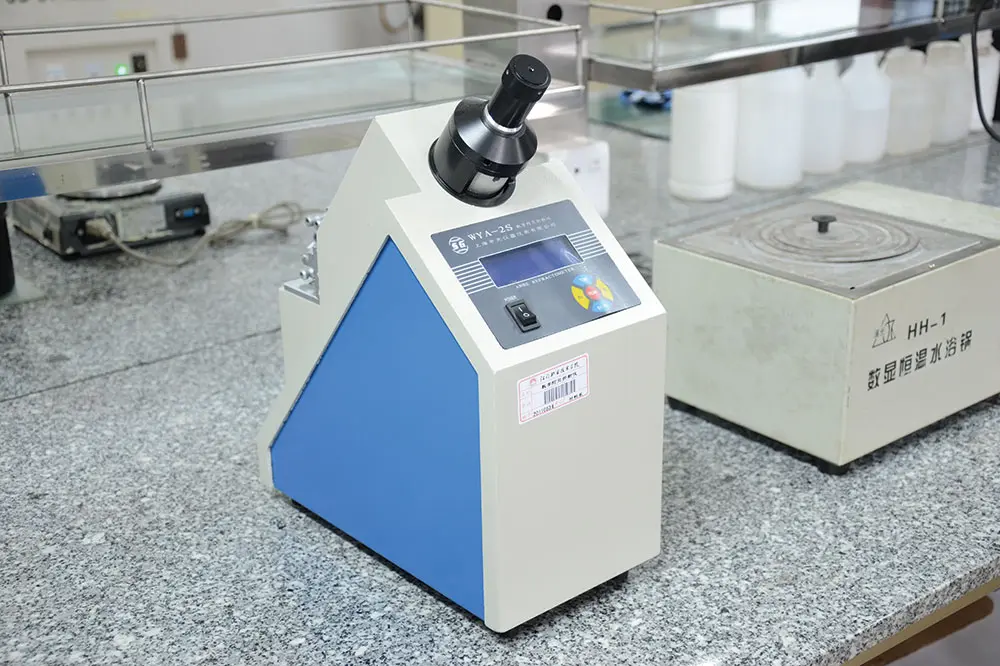
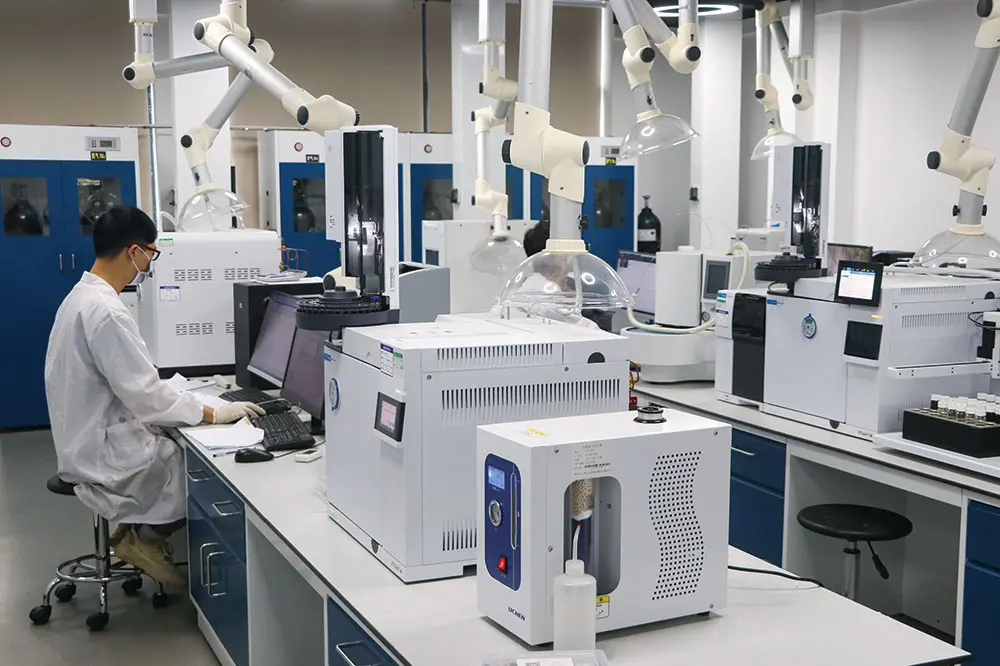
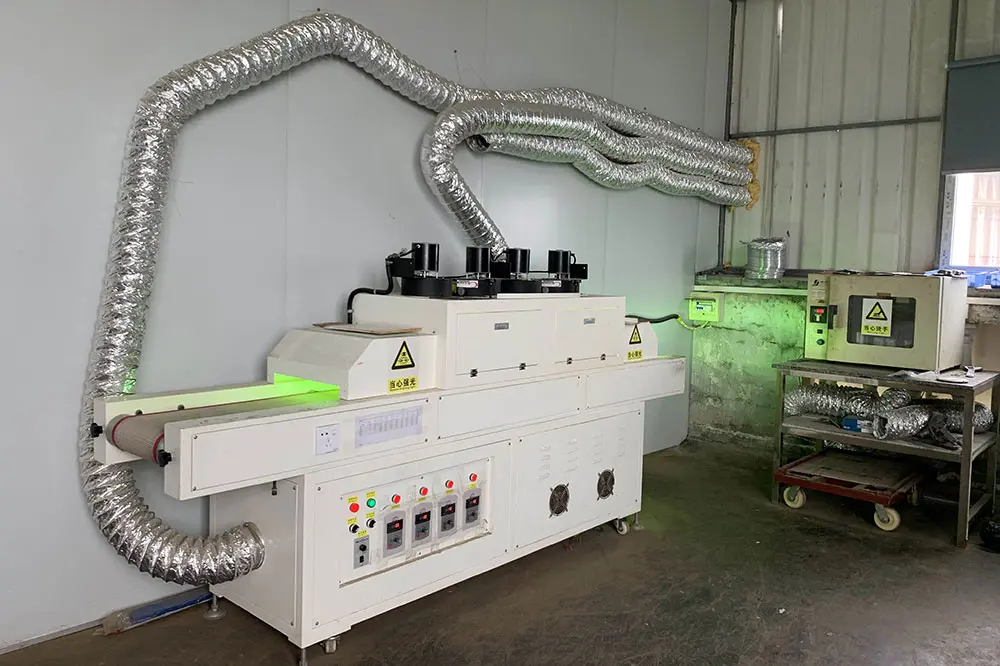
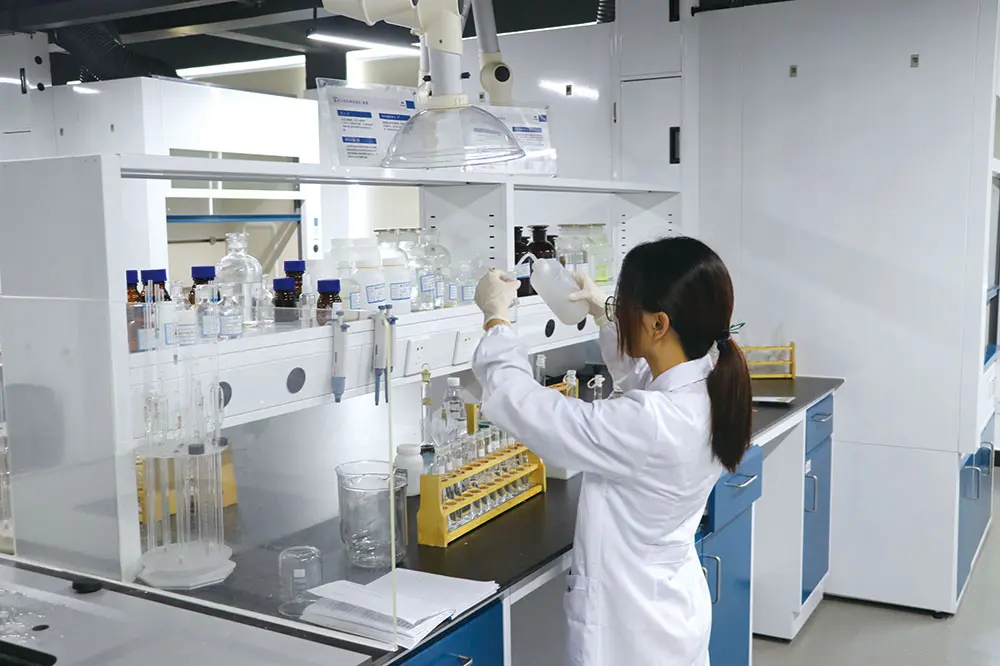
We manage two modern production bases: our original facility in Jiangmen, occupying roughly 10,000 square meters, and a major manufacturing expansion in Yunfu, spanning 40,000 square meters. Combined, they house over 10 fully operational, automated processing lines. Under computerized Distributed Control Systems (DCS), reactor thermal cycles, chemical dosing, and pressure metrics are monitored in real time, guaranteeing batch uniformity.
Both production sites are certified to the rigorous international standards of ISO9001 Quality Management Systems and ISO14001 Environmental Management Systems. Partnering with domestic research institutes and raw material global suppliers, Ever Ray provides chemical purity and security of supply for large industrial volumes.
A comprehensive examination of UV radiation curing dynamics, resin structures, and cross-linking efficiency for polymer engineers.
In industrial surface curation, matching oligomers to processing requirements is essential for durability, processing speed, and substrate adhesion. Modern radiation-curing technology depends on photopolymerization, where liquid resins convert into cross-linked solids within seconds under ultraviolet (UV) or electron beam (EB) exposure. We design our chemical architectures around the molecular structure of four major oligomer families:
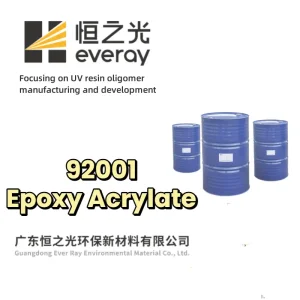
Epoxy acrylates serve as the foundational workhorse of UV-curing technology. By reacting epoxy backbones (predominantly Bisphenol A diglycidyl ether) with acrylic acids, we create a resin family known for fast curing rates, high surface hardness, and chemical resistance. Under UV exposure, the acrylate double bonds undergo free-radical polymerization, creating cross-linked net-like configurations. This chemistry is ideal for overprint varnishes, high-gloss paper coatings, wood finishes, and metal protective coatings. However, due to the aromatic ether structural linkages, traditional epoxy acrylates can be prone to weathering-induced yellowing and limited elasticity. To address this, Ever Ray develops modified aliphatic epoxy acrylates that offer improved flexibility and yellowing resistance.
Curing shrinkage occurs when distance-based van der Waals forces between liquid monomers are replaced by covalent bonds. Ever Ray minimizes this stress by incorporating long aliphatic segments into the backbone. This lowers cross-link density without affecting the curing rate, protecting delicate substrates from warping.
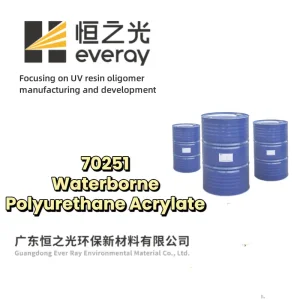
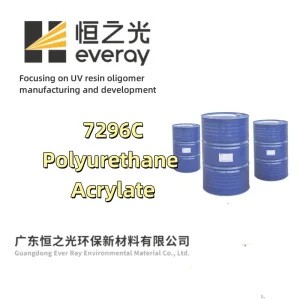
Polyurethane acrylates combine the toughness, flexibility, and abrasion resistance of polyurethanes with the fast curing speed of acrylates. The performance of PUAs is largely determined by the choice of polyisocyanate chemistry:
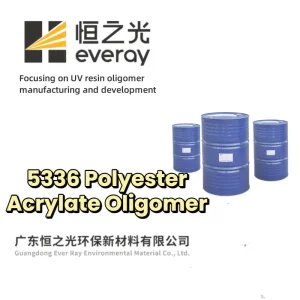
Polyester acrylates are produced by esterifying polyester polyols with acrylic acids. Their primary advantage lies in their low viscosity, which reduces the need for reactive diluents (monomers) to achieve application-ready formulations. Additionally, polyester acrylates exhibit high pigment-wetting capability, making them highly effective binders for UV-curable offset, flexographic, and screen-printing inks. They also provide balanced properties for wood and paper coatings.
The industrial curing sector is adapting to meet global sustainability and decarbonization targets. Modern regulatory standards have shifted interest toward waterborne UV-curable systems. Waterborne UV resins utilize water as a non-reactive diluent rather than traditional monomers, significantly lowering volatile organic compounds (VOCs) and helping manufacturers meet local air-quality limits. Additionally, the industry is incorporating bio-based raw materials sourced from plant oils and agricultural starches. Ever Ray is actively developing sustainable UV oligomer alternatives, helping our clients reduce carbon footprints while maintaining technical performance.
Browse our selection of performance-engineered chemical products, designed for applications from 3D printing and wood varnishes to highly flexible adhesives.
Ensuring cross-border compliance, import facilitation, and technical application support in major chemical markets.
We work to ensure all export formulations meet European REACH regulations, guaranteeing smooth customs clearance and import processing for EU clients.
Our raw materials are fully screened for heavy metals and hazardous substances, helping electronics brands maintain global RoHS compliance.
Our chemistry team modifies molecular weights, reactive groups, and viscosity profiles to suit your specific curing setups.
Utilizing proximity to major southern ports and maintaining large storage networks, we ensure consistent supply and competitive shipping rates.
Get answers to common technical, logistics, and formulation questions to support your procurement decisions.
 Ever Ray