Engineered for extreme hardness, chemical stability, and structural longevity across demanding industrial applications.
Addressing surface degradation challenges across the world's most demanding physical and chemical environments.
Handheld smart devices, display screens, and wearable technologies require ultra-thin coatings with exceptional steel-wool scratch resistance. Our hyperbranched polymer resins preserve tactile sensitivity while preventing micro-abrasions from daily handling.
From high-gloss piano black interior trims to protective clear coats, our customized UV resins deliver superior scratch resistance and environmental weatherability. They resist chemical cleaners, gasoline exposure, and abrasive car-wash brushes.
Protecting wood substrates requires excellent adhesion and flexibility to handle natural expansion. Our specialized oligomers supply a tough surface cure that prevents deep gouges and micro-scratches from heavy foot traffic and furniture movement.
In modern industrial design, mechanical wear is one of the leading causes of aesthetic and functional product failure. Scratch-resistant materials must balance high cross-linking density with substrate elasticity. If a coating is too rigid, it becomes brittle and cracks under mechanical impact; if it is too soft, it scratches easily under negligible forces. Our advanced chemistry focuses on optimizing this exact boundary, providing suppliers and manufacturers with raw materials that exhibit high pencil hardness (up to 4H-6H) while retaining the structural flexibility required for post-formable operations.
The global transition toward green chemistry has accelerated the adoption of UV-curable systems. Regulatory bodies (such as the EU REACH and US EPA) continue to tighten restrictions on Volatile Organic Compounds (VOCs). Consequently, downstream coating and ink manufacturers are shifting away from traditional solvent-based thermoplastic coatings toward energy-efficient, 100% solids UV-curing technologies.
As a global supplier, Guangdong Ever Ray Environmental Material Co., Ltd. stands at the intersection of this commercial transition. By controlling the synthesis of specialized acrylates and hyperbranched oligomers, we allow manufacturers to produce low-VOC coatings without sacrificing physical performance. Our materials are distributed globally, ensuring that multinational brands can meet their technical specifications and regional environmental laws simultaneously.
Demonstrated industrial scale, advanced quality assurance, and manufacturing reliability.
Understanding the correlation between acrylate molecular weight, functionality, and performance parameters.
To achieve high scratch resistance, coatings rely heavily on the molecular structure of oligomers. Traditional linear polymers have limited cross-linking densities, making them vulnerable to mechanical cutting and chemical solvent ingress. Our product line relies on three major chemistry paths:
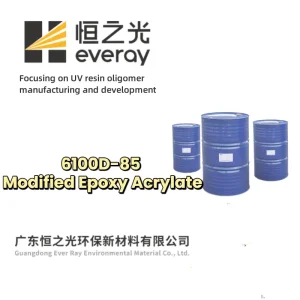
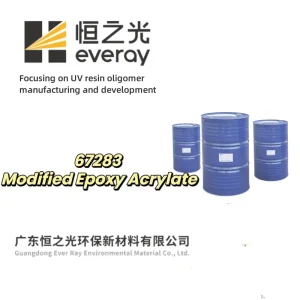
Epoxy acrylates (such as our Epoxy Acrylate 92001 and Modified Epoxy Acrylate 6300) provide exceptionally fast curing speeds, high surface hardness, and strong chemical resistance. They are widely used as base resins in paper varnishes and wood coatings where rapid line speeds and cost efficiency are critical.
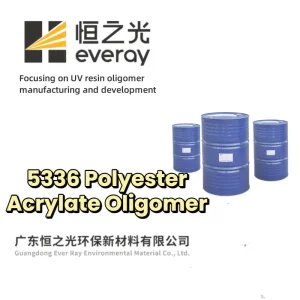
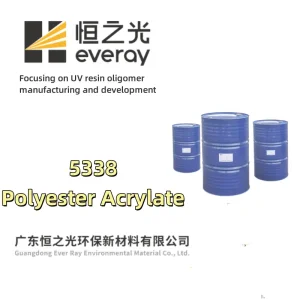
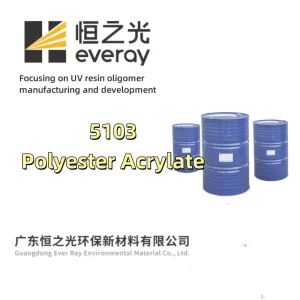
Polyester acrylates (like our Polyester Acrylate 5336 and 5103) balance flexibility with pigment wetting properties. These properties make them highly suitable for screen, offset, and flexographic packaging inks, ensuring that the cured film adheres to plastic films and metal foils without shrinking or peeling.
Hyperbranched acrylic UV resins (like our 4600 Hyperbranched Resin) pack many reactive acrylate groups into a single globular macromolecule. This architecture yields an extremely high cross-linking density upon UV curing, while keeping viscosity remarkably low—preventing the formulation from becoming too thick to apply.
| Resin Series | Primary Benefit | Primary Application Fields | Target Physical Property |
|---|---|---|---|
| Polyester Acrylates (e.g., 5336, 5103) | Flexibility & Pigment Wetting | UV Lithographic Inks, Plastic Varnishes | Excellent Adhesion & Flex Properties |
| Epoxy Acrylates (e.g., 6100D-85, 92001) | Ultra-fast Cure & High Hardness | Wood Coatings, Paper Varnishes, Overprint Varnishes | Excellent Chemical & Abrasion Resistance |
| Hyperbranched Acrylates (e.g., 4600) | High Functionality / Low Viscosity | Anti-scratch Coatings, Electronics Housing | Extreme Pencil Hardness & Toughness |
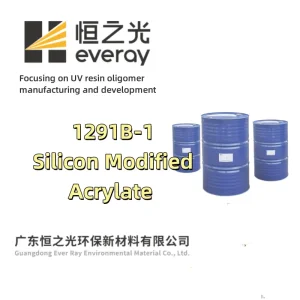
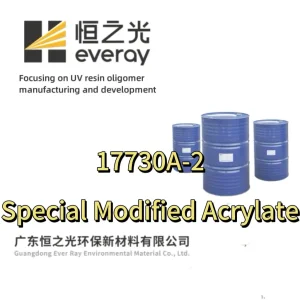
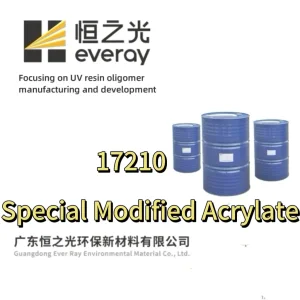
| Special Modified Acrylates (e.g., 17730A-2, 1291B-1) | High Water Resistance, Antifouling | Glass UV Coating, Screen Printing, Easy-Clean Coatings | Hydrophobic/Oleophobic Surface Protection |
Guangdong Ever Ray Environmental Material Co., Ltd. (Est. 2006)
Guangdong Ever Ray Environmental Material Co., Ltd., established in 2006, is a high-tech enterprise focusing on the R&D and manufacturing of oligomers for UV curable resin such as epoxy acrylate, polyurethane acrylate (water-borne, aliphatic urethane, aromatic urethane), polyester acrylate, pure acrylate, and other special functional modified acrylate oligomers.
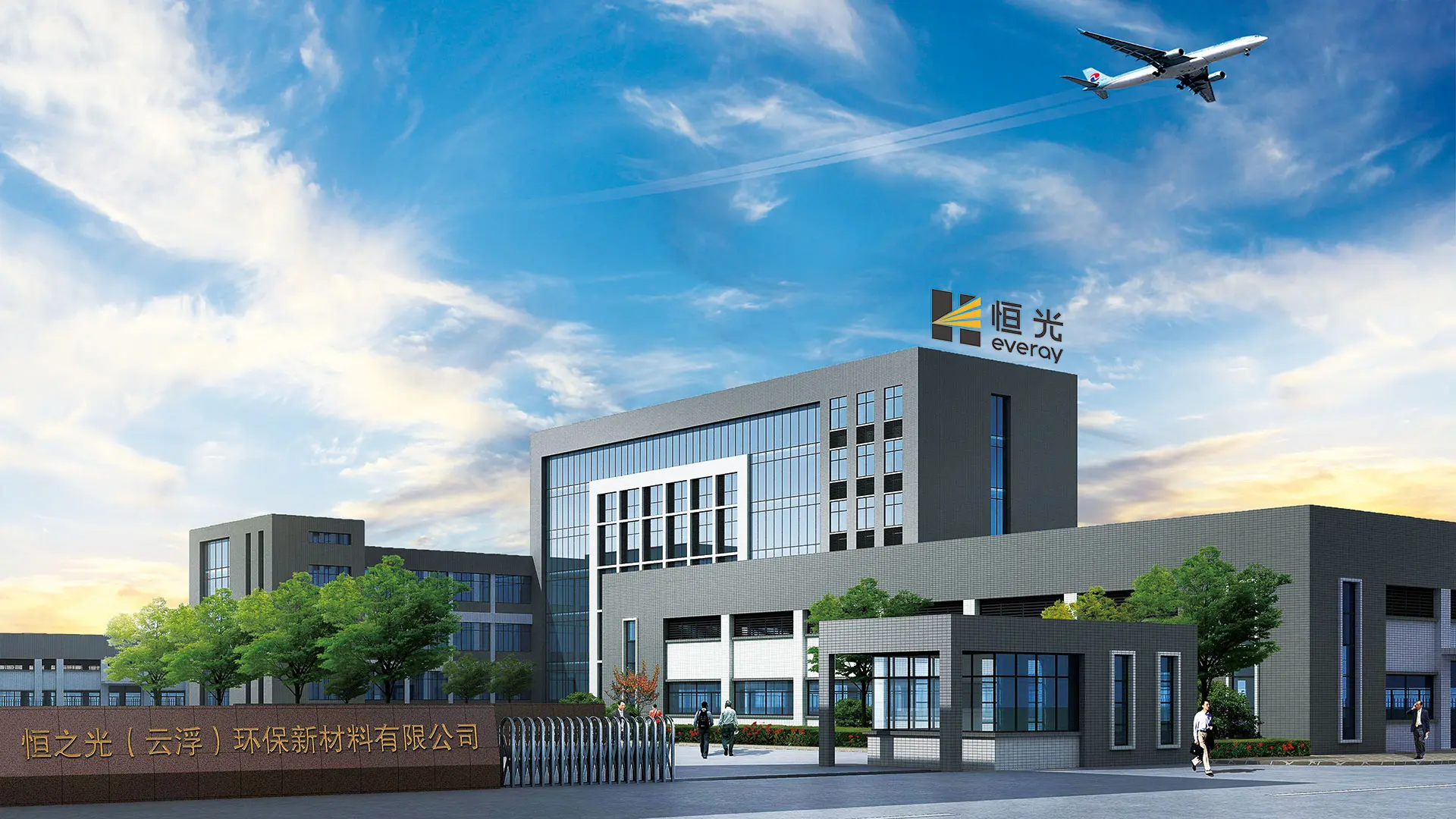
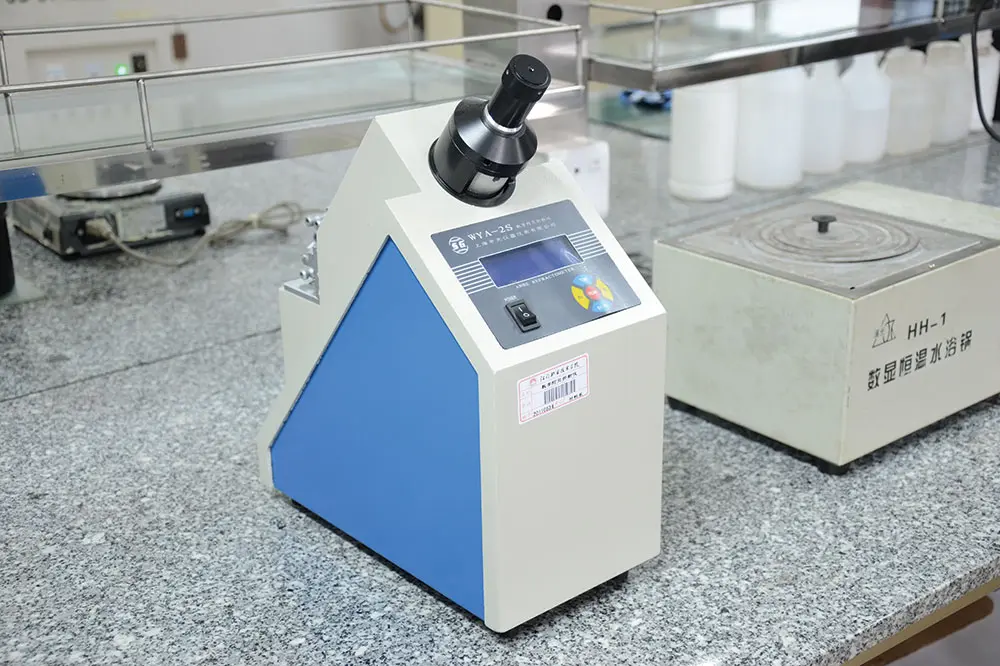
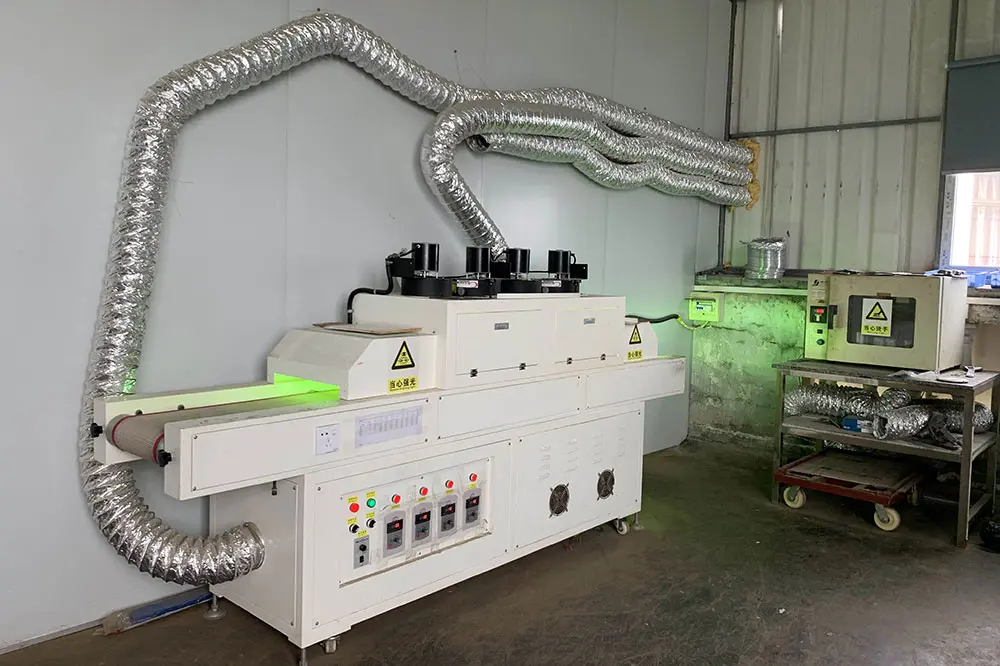
We operate two dedicated production bases: one in Jiangmen, Guangdong, covering approximately 10,000 square meters, and another in Yunfu, Guangdong, covering around 40,000 square meters. Both facilities feature comprehensive quality control, storage, and logistics operations. Our total annual production capacity exceeds 20,000 tons, running across more than 10 modern production lines. To maintain rigorous quality standards, our factories operate under the ISO9001 Quality Management System and ISO14001 Environmental Management System. We also employ a fully computerized DCS (Distributed Control System) to ensure batch-to-batch consistency and process safety.
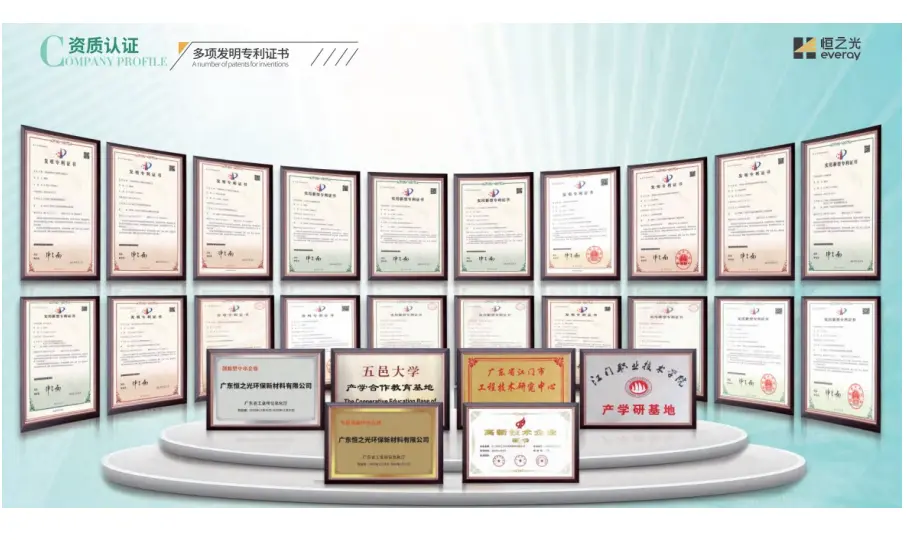
We source premium raw materials globally and consult with leading domestic UV material experts to maintain stability in chemical performance. With over 10 invention and utility patents, and a dedicated team of more than 15 chemical technicians in our R&D department, we focus on delivering UV oligomers that provide high reactivity, chemical resistance, and gloss. We help our global customers balance cost-efficiency with high physical performance.
Ensuring seamless international distribution, import compliance, and local technical assistance.
We work proactively to ensure our oligomers comply with key international frameworks, including EU REACH registration, RoHS directives, TSCA inventories, and local VOC guidelines. This guarantees frictionless importation for our worldwide buyers.
Operating out of Jiangmen and Yunfu near key southern China ports, we facilitate ocean freight, air transport, and land logistics. We offer flexible packing standards, including steel drums, IBC totes, and bulk ISO tanks to fit different handling requirements.
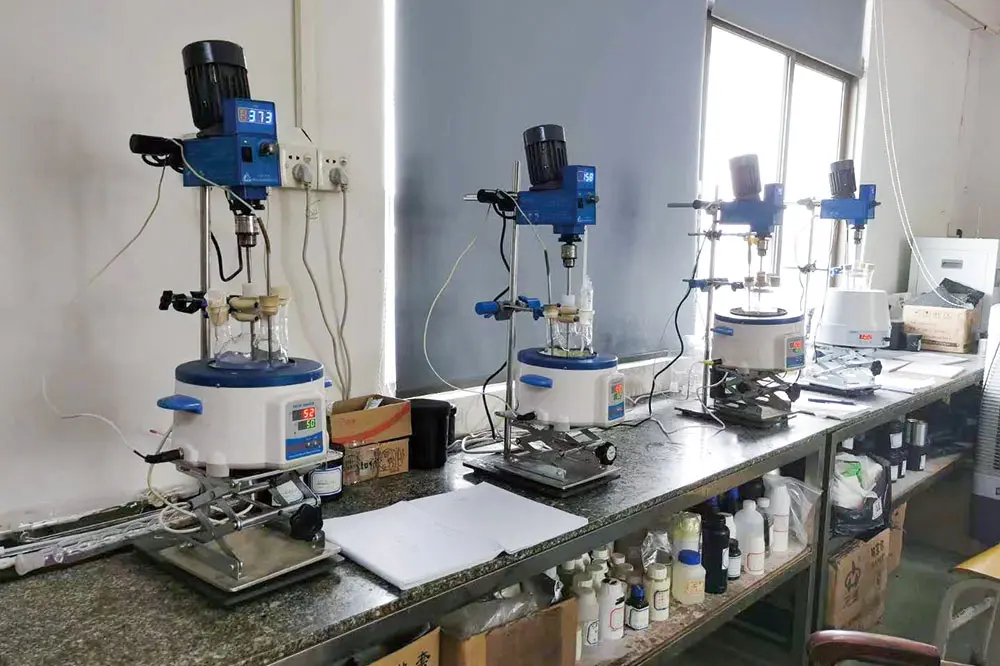
We provide localized technical troubleshooting for chemical formulators. If you need to adjust viscosity, boost cure speed, or improve substrate adhesion, our technical team offers support from laboratory test stages through full production trials.
Investing in sustainable, bio-based monomers, dual-curing resins, and next-generation UV curing systems.
The UV-curing market is evolving rapidly. At Ever Ray, we align our product development with emerging technical trends to support our partners' future product lines. Our R&D team focuses on three key future initiatives:
Dual-curing systems combine UV curing with secondary mechanisms (like thermal curing or moisture curing) to resolve shading issues in three-dimensional parts. This technology is critical in fields like 3D printing and automotive assembly, where UV light cannot reach complex internal geometries. Our Dual-Curing UV Resin 72017A-8 highlights our work in this area, delivering low shrinkage and high elasticity for 3D-printed products and performance footwear.
Industrial lines are steadily transitioning from traditional mercury vapor lamps to UV-LED lights to reduce energy costs and system heat. LED lamps emit narrow light spectra (typically 365nm, 385nm, or 395nm), which requires oligomers with high surface curing speeds at these specific wavelengths. Ever Ray is optimizing its acrylate oligomers to ensure rapid cross-linking without relying on oxygen-inhibition preventions.
We are researching bio-sourced intermediates to replace petroleum-derived precursors in our synthesis processes. Developing bio-based polyurethane and polyester acrylates allows us to help customers lower their carbon footprints while preserving the hardness and scratch resistance of their finished coatings.
Expert technical answers regarding scratch-resistant resins, application protocols, and purchasing.
Cross-linking density refers to the concentration of covalent bonds between polymer chains. Higher cross-linking density creates a tighter molecular network, preventing physical objects from penetrating or gouging the coating surface. Oligomers with higher functionality (such as hyperbranched acrylates) yield denser networks upon UV exposure, resulting in higher pencil hardness and steel wool resistance.
Scratch resistance measures a coating's ability to withstand sharp, localized pressure (often measured using pencil hardness or micro-indentation tests). Abrasion resistance refers to a material's capacity to withstand continuous frictional wear over time (typically measured via Taber abrasion tests). A truly durable coating requires a careful balance of high surface hardness to resist scratches and elastic toughness to resist abrasive wear.
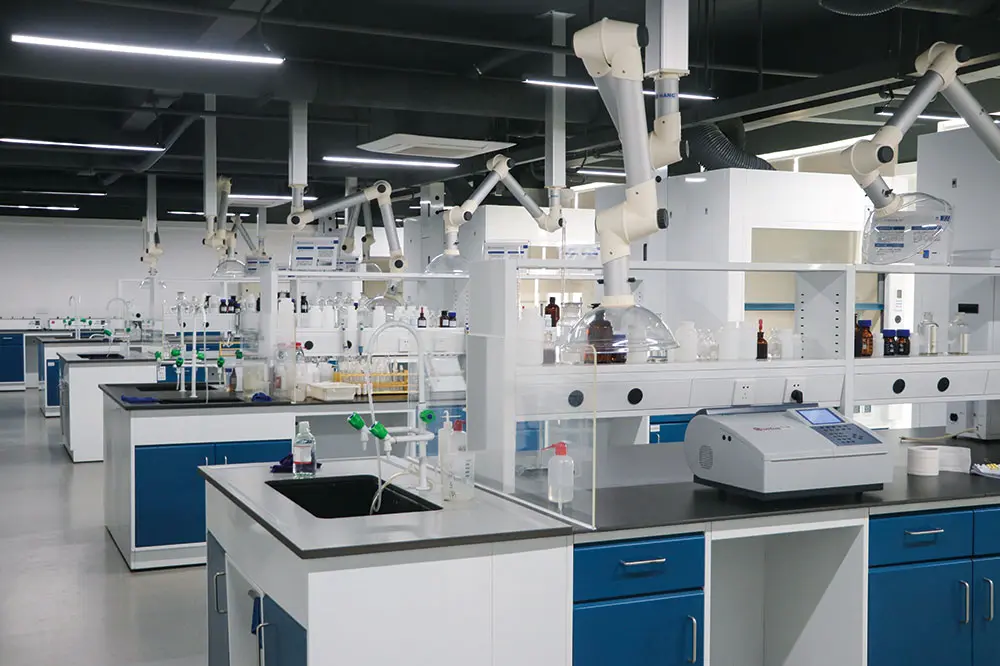
We run our manufacturing plants in Jiangmen and Yunfu using a fully computerized DCS (Distributed Control System). This automated control system monitors raw material dosing, reaction temperatures, pressure states, and cycle durations in real time. We test each batch in our analytical laboratory using gel permeation chromatography (GPC), viscometers, and FTIR spectroscopy to ensure it meets our technical specifications before dispatch.
Yes, most of our epoxy, polyurethane, and polyester acrylates exhibit good compatibility with organic solvents such as ethyl acetate, butyl acetate, MEK, and PM. However, to meet green building and low-VOC manufacturing requirements, we recommend formulating with active monomer diluents (like monomeric mono/di/tri-acrylates) to create 100% solid, solvent-free coatings.
For applications demanding exceptional clarity and yellowing resistance under direct UV exposure, we recommend our modified acrylate and aliphatic urethane acrylate series, such as the 17730A-2 Special Modified Acrylate Resin. Unlike standard epoxy acrylates, these oligomers do not contain aromatic rings, making them highly resistant to photo-oxidation and yellowing.
Targeted solutions for low viscosity, high elasticity, and distinct matte or glossy surface effects.
 Ever Ray