Engineered for rapid polymerization response, excellent surface curing, and exceptional mechanical stability on automated finishing lines.
The city of Nagoya, serving as the industrial capital of Aichi Prefecture, represents one of the world's most dense concentrations of automotive engineering, aerospace parts manufacturing, and high-precision electronics industries. Within this advanced industrial cluster, chemical suppliers of high-performance materials are required to provide extremely consistent, high-purity, and low-VOC (volatile organic compound) formulation components. Active amine synergists, photoinitiators, and oligomers are critical to these high-speed, environmentally friendly manufacturing systems.
Active amines (often tertiary amine co-initiators) are essential components in radical-induced photopolymerization systems. Their primary role is to overcome the challenge of oxygen inhibition—a pervasive issue in ambient-air UV curing where atmospheric oxygen terminates active radical species at the coating's surface, leading to tackiness and reduced surface hardness. By acting as highly efficient hydrogen donors, active amines react with radical peroxy species, converting them back into active, propagating radicals while scavenging atmospheric oxygen. This mechanism ensures that coatings, inks, and electronic encapsulants cure rapidly, leaving a scratch-resistant, hard, and uniform surface layer.
Meeting the strict mechanical and non-yellowing requirements of Chubu's automotive interior and exterior clear coats.
Overcoming interfacial oxygen inhibition to achieve rapid tack-free surface curing in ambient atmospheric conditions.
Supporting low-VOC emission standards and dual-cure architectures that comply with international safety regulations.
In modern formulation science, an active amine synergist cannot function in isolation. It must be paired with oligomers designed to respond to fast radical initiation. Acrylated oligomers—including polyurethane acrylates (PUA), epoxy acrylates (EA), and polyester acrylates (PEA)—define the bulk mechanical traits of the cured film: flexibility, chemical resistance, substrate adhesion, and tensile strength. Our portfolio bridges this dynamic by providing high-performance oligomers designed to pair with tertiary amines for optimal synergy, resulting in elevated polymerization kinetics, minimized volume shrinkage, and superior resistance to yellowing over time.
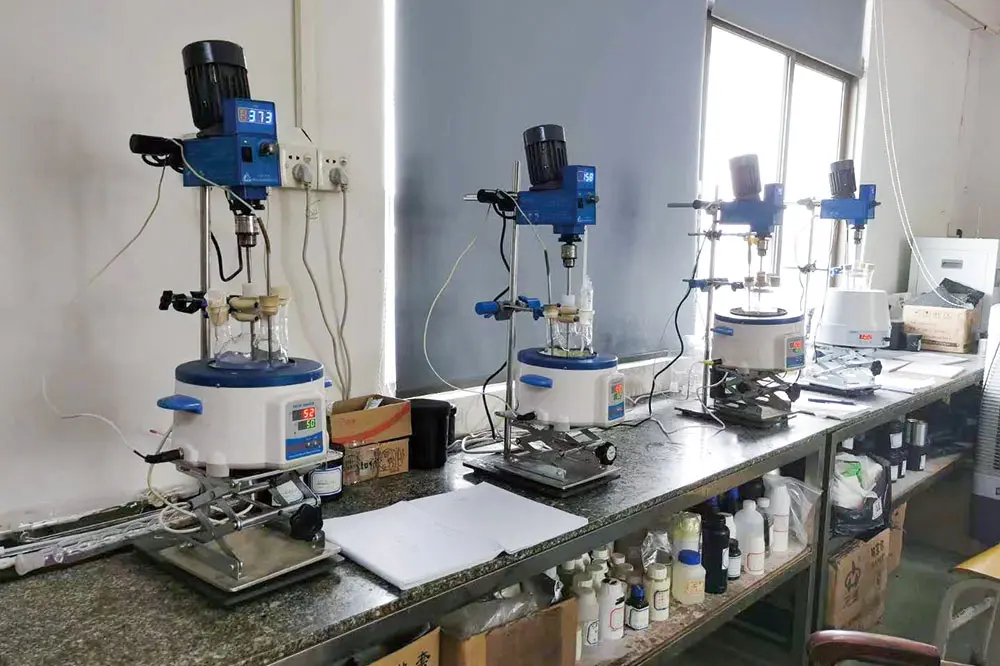
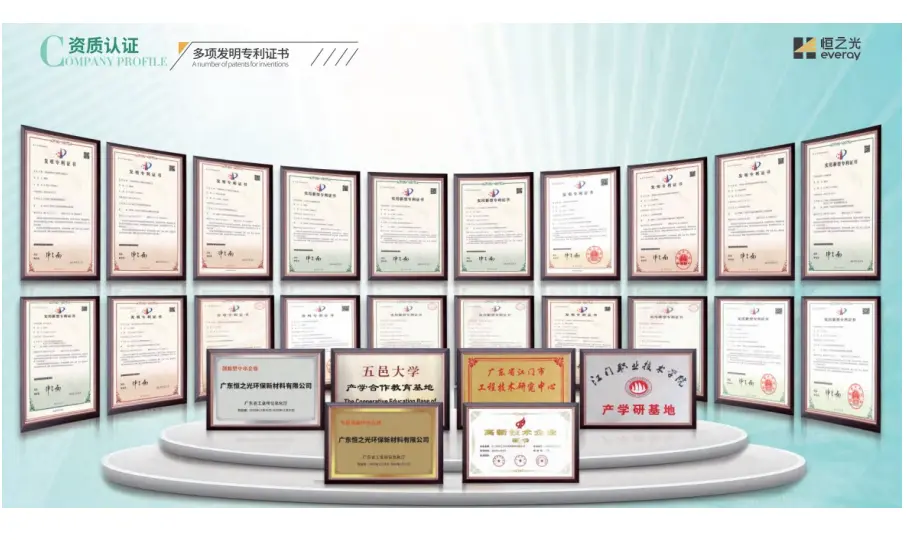
Annual Production Capacity (Tons)
Senior R&D Technicians
Invention & Practical Patents
System Certified Quality
How our oligomer chemical products solve specific coating and performance problems across Nagoya's primary industrial sectors.
Aichi Prefecture's automotive supply chain demands soft-touch, scratch-resistant, and low-VOC coatings for interior dashboards, consoles, and trim parts. Utilizing our Polycarbonate Acrylate 72203A paired with active amine synergists allows converters to formulate soft-feeling coatings that resist sweat, sunscreen, and cleaning chemicals while maintaining color fastness without yellowing over long cycles.
Nagoya's packaging and printing companies utilize high-speed UV offset presses. Maintaining the delicate balance between lithographic dampening water and UV ink is a persistent challenge. Our 5403-3F Polyester Acrylate is engineered to stabilize this water-ink balance, allowing printing speeds above 15,000 sheets per hour without spitting or ink emulsification.
With the rise of localized additive manufacturing for athletic shoe soles and complex damping structures, resin formulations need high elasticity, quick cure times, and minimal shrinking. Our 72017A-8 Dual-Curing UV Resin delivers exceptional mechanical elasticity and low volume contraction, making it ideal for continuous liquid interface production (CLIP) printer platforms.
The global market for active amines and UV oligomers is undergoing a significant transition toward green formulation architectures. Driven by European REACH regulations and Japan's own chemical oversight frameworks, chemical buyers are actively phasing out tin catalysts, BPA (Bisphenol A), and volatile organic solvents. In response, Guangdong Ever Ray focuses on green, eco-friendly chemical pathways: expanding our range of waterborne UV resins, developing monomer-free aliphatic polyurethane acrylates, and offering bio-sourced carbon-based alternatives. Our dual production bases prioritize sustainable, eco-friendly manufacturing methods, aligning with Nagoya's municipal goals of establishing carbon-neutral supply loops by 2050.
A comprehensive collection of high-purity polyurethane, polyester, epoxy, and waterborne resins engineered for advanced compounding.
Guangdong Ever Ray's scientific approach is built around resolving physical constraints in UV radical curing. We utilize a highly analytical approach to macromolecular design. By tuning the architecture of oligomers, we can predict and adjust viscosity, cure speeds, and film physical properties.
Traditional epoxy acrylates cure very quickly but can experience significant volumetric shrinkage (up to 8-15%), which damages film flatness, causes substrate curling, and reduces adhesion. To solve this, our chemists developed modified oligomer models, such as the 17701 Low Shrinkage Modified Acrylate Oligomer. By incorporating flexible hydrocarbon blocks and introducing dual-cure mechanisms, we reduce internal stress during phase transition from liquid monomer state to high-density polymer network. This keeps volumetric shrinkage under 2-4%, preserving adhesion on difficult substrates like untreated plastics, PET, or metal surfaces.
Adjusting acrylic functionalities helps us fine-tune curing density. For example, our 7600 Multifunctional Polyurethane Acrylate balances hardness, scratch resistance, and curing speed, meeting automotive requirements for scratch-resistant clear coats.
The development of waterborne UV resins, such as the Waterborne 70251 UV-resin, allows formulation plants in Nagoya to blend industrial wood and plastic coatings that emit zero volatile organic solvents, aligning with modern industrial health and safety standards.
Oxygen inhibition is a primary challenge in rapid ambient UV curing. When UV radiation excites Type II photoinitiators (e.g., benzophenone), they enter a triplet state but cannot initiate polymerization without a hydrogen donor. Tertiary amines act as excellent co-initiators, donating hydrogen radicals to form highly reactive amine radicals. These amine radicals react with molecular oxygen at the liquid interface, producing non-reactive species while regenerating initiating radicals. Consequently, incorporating active amines into oligomer systems improves cure rates, reduces the necessary concentration of expensive photoinitiators, and produces smooth, high-hardness surfaces.
Addressing core application challenges in wood coatings, electronic packaging, and performance offset inks.
Nagoya's precision electronics plants require adhesives that cure instantly without heat. Our 6200D UV-resin is engineered for shadowless glue applications, featuring rapid polymerization under targeted wavelength LEDs (365nm-395nm) to ensure high-adhesion bonding for optical glass-to-glass and glass-to-metal interfaces.
Furniture makers using automated roller-coating setups require resins that resist cracking under high mechanical load. Pairing 6118 Epoxy Acrylate with reactive monomer diluents creates low-viscosity, high-build primer films that fill grain pores, cure instantly, and dry to a tough, scratch-resistant base.
Creating tactile effects like wrinkle and snowflake patterns on cosmetic cartons and consumer electronics boxes is difficult to regulate. Our specialized 7317 UV resin is formulated to control surface vs. through-cure rates under dual UV/LED curing lines, resulting in uniform, reproducible tactile finishes.
Common questions about active amines, oligomer characteristics, and product application methods.
 Ever Ray